A client didn't show up. What it costs you and how a deposit prevents it
Three hours booked, your station ready, the client not answering. We work out what one no-show really costs and how a small deposit prevents it without straining things with your regulars.

In short
- One no-show on a three-hour appointment can cost around €150 and half a working day.
- Asking new clients only for a deposit is enough. Regulars book the way they always have.
- The article includes a ready-to-send message for your clients.
Contents 6 parts
What one no-show really means
Lip blushing takes about three hours.A consultation, the sketch, the procedure itself and aftercare instructions. You set up your station in the morning, open the pigments and wait. The client doesn't come and doesn't pick up the phone.
Those three hours can't be sold again. Hardly anyone calls at ten in the morning to book a long procedure for lunchtime. The time is gone, and the money with it.
And that isn't the whole cost. Another client wanted exactly that slot but was told it was taken. They may have booked somewhere else.
What it costs across procedures
Permanent makeup is the starkest example, but it happens in every profession with long appointments. Roughly, one no-show looks like this:
| Procedure | Length | Loss |
|---|---|---|
| Gel nail extensionsNails | 2 h 30 min | €50 |
| 2D lash extensionsLashes | 2 h | €55 |
| Facial cleansingCosmetology | 1 h 30 min | €60 |
| Lip blushingPMU | 3 h | €150 |
Over a year
If a long appointment stays empty twice a month, that is 24 empty slots a year. At €150 each, that is €3,600, not counting the time you spend waiting and calling.
Why a deposit works
A deposit isn't a penalty and it isn't profit. It is a small step that turns “I might come” into “I'm booked”.
- A paid slot is not forgotten as easily as a free booking.
- If plans change, the client tells you in time, because they want the deposit back.
- You have time to offer the freed slot to someone else.
A reminder the day before helps people who simply forgot. A deposit also helps with people who booked “just in case”. The two work best together.
How to introduce a deposit in four steps
- Pick an amount. Usually 20–30% of the price is enough, for example €30 of €150. It should be enough that losing it hurts, but not so much that a new client hesitates.
- Ask new clients only. Regulars who always turn up book the way they always have. Nothing changes for them.
- Write the rule in one sentence. For example: I refund the deposit if you cancel at least 48 hours ahead.
- Say it while they book. Not after the time has already been confirmed.
We wrote separately about how to say it so nobody takes offence: How to ask for a deposit without upsetting clients.
Ready-to-use message
Message to a new client about the deposit
Replace the parts in brackets with your own.
RINDIQ asks new clients for the deposit on its own when they book online. See how it works
How it looks in RINDIQ
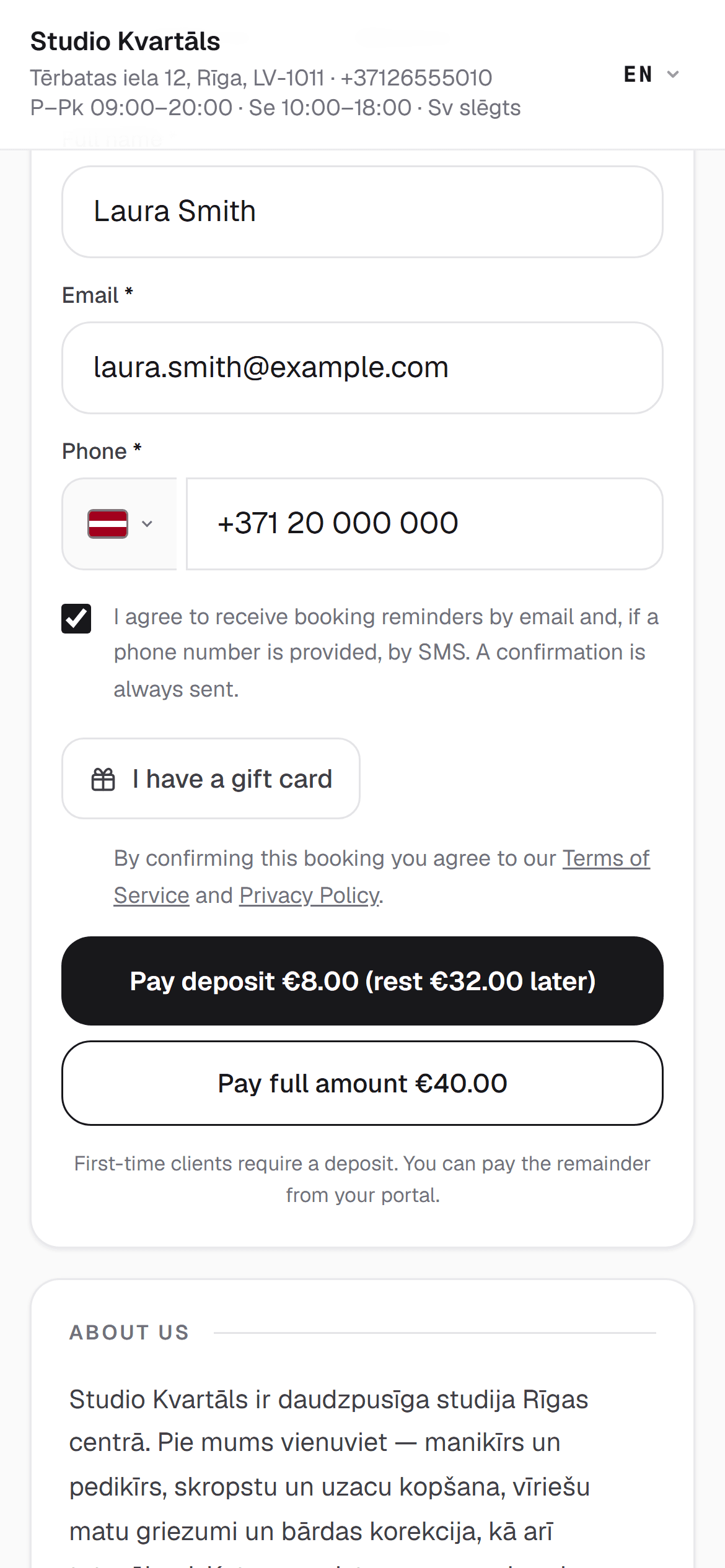
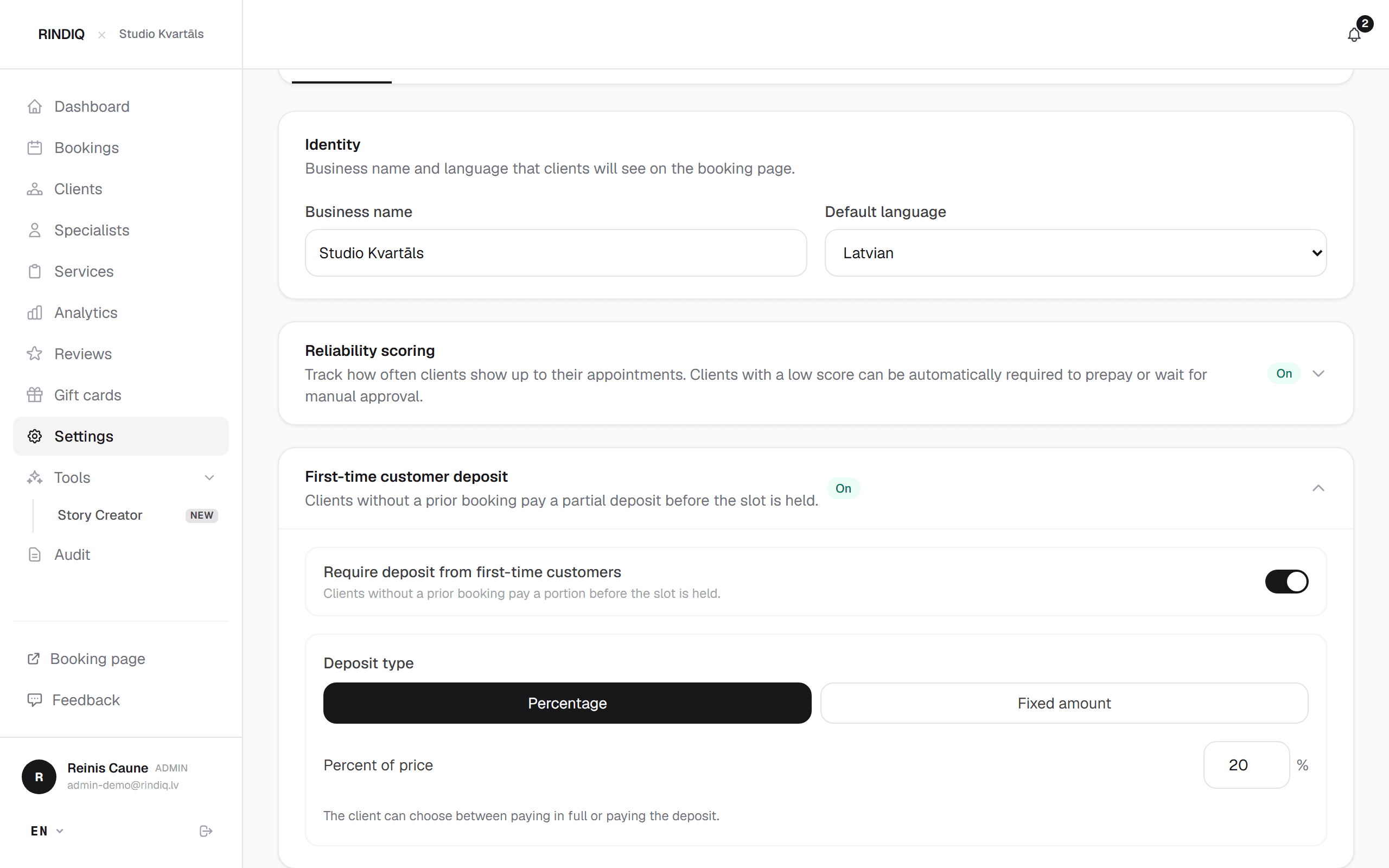
You set the deposit as a percentage or a fixed amount in euros. The system asks for it only from clients booking with you for the first time. The client pays by card, Apple Pay or Google Pay while booking, and the money goes to your Stripe account.
The client can choose to pay the deposit or the full price upfront. They pay the rest later online or in person, and your calendar shows how much has been paid.
If the client still doesn't show up
If the deposit was paid
You keep the deposit, as your terms say. It doesn't cover the whole procedure, but it covers the materials and part of your time.
If there was no deposit
Send a short, calm message and offer a new time with a deposit. If it happens again, you can ask for a deposit even once the client is no longer new. RINDIQ can do this for you: for clients who often miss appointments, the system can require payment upfront.
One no-show a month feels minor until you add it up. A small deposit from new clients is a simple way to protect your time without losing the people who have been coming to you for years.
Try RINDIQ free for 14 days
No card needed. You can set up your booking page and deposits in about 5 minutes.
Read next
All articlesHow to ask for a deposit without upsetting clients
When to bring up a deposit, how to word it and what to reply when a client pushes back.
Bookings through Instagram and WhatsApp: where clients get lost
Where clients slip away in chats and how to close the gaps without stopping work.
How to choose a booking system: 10 things to compare
Ten questions to ask any booking system before your clients get used to the link.