How to ask for a deposit without upsetting clients
A deposit isn't a sign of distrust if you say it the right way. When to bring it up, how to word it and what to reply when a client pushes back.

In short
- Mention the deposit while the client is booking, not after the time is confirmed.
- Say that the deposit counts towards the price and what happens if plans change.
- The article includes ready replies to the three most common objections.
Contents 6 parts
Why a deposit sometimes upsets clients
Clients rarely mind the amount itself.What upsets them is a deposit that appears out of nowhere once the time seemed settled, or one that sounds like suspicion: “you probably won't turn up anyway”.
The same deposit, mentioned early and calmly, sounds like an ordinary reservation. Like a hotel or a restaurant booking with prepayment, which nobody takes as an insult.
When to bring it up
In the very first message where you offer a time. Not after the client is already happy that everything is arranged.
- Instagram or WhatsApp: in one sentence together with the time you offer.
- Booking page: the amount is visible before the client confirms the time.
- Phone: say it straight away, then send a message with the amount and your terms.
The earlier a client hears about the deposit, the less it feels like a surprise. Hearing it at the very end feels like the rules were changed.
How to word it
Three things make a deposit a reservation rather than a sign of distrust:
- It counts towards the price.The client doesn't pay more. They just pay part of it earlier.
- A clear deadline. Until when they can cancel and get the deposit back.
- A reason, not a suspicion.“The procedure takes three hours, so I reserve the time with a deposit” sounds very different from “lots of people don't show up”.
What to reply when a client pushes back
Three objections come up most often. Each has a short, calm answer:
Ready-to-use message
Replies to objections
Replace the parts in brackets with your own.
If the client still says no, let them go calmly. The slot stays free for someone who is ready to reserve it.
Mistakes to avoid
- Asking for the deposit only after the time is confirmed.
- Changing the rules from client to client: refunding one, not another. Clients talk to each other.
- Asking regulars who have never been late for a deposit too.
- Holding a slot while waiting for a transfer with no deadline. Agree when it must be paid.
If you don't want to type it every time
On a RINDIQ booking page, a new client sees the deposit before confirming the time and pays straight away by card, Apple Pay or Google Pay. You don't write a message, wait for a transfer or check your bank account. Regular clients are not asked for a deposit.
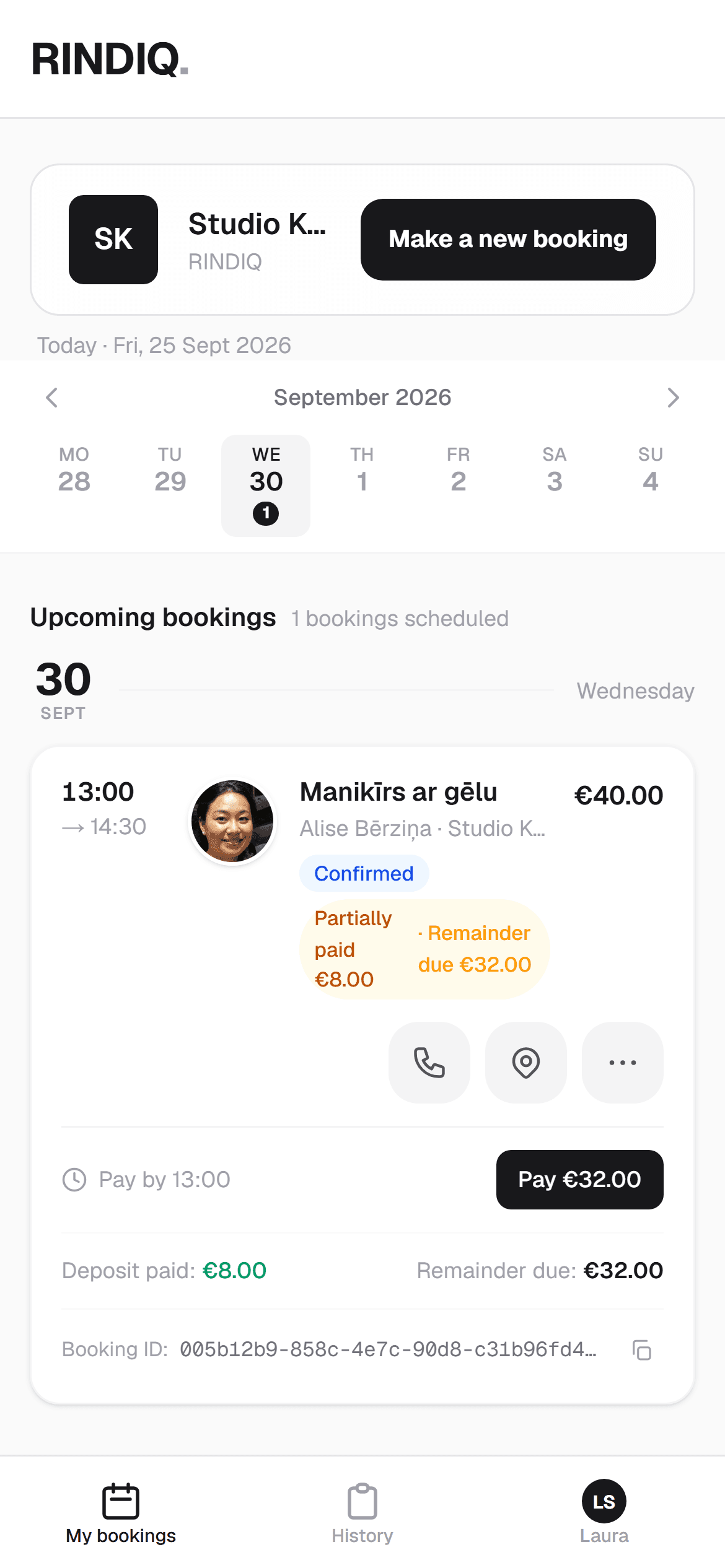
Afterwards the client sees in their portal how much has been paid and what is left, and can pay the rest online or in person.
We worked out what one no-show costs and why a deposit changes it in A client didn't show up.
Try RINDIQ free for 14 days
No card needed. You can set up your booking page and deposits in about 5 minutes.
Read next
All articlesA client didn't show up. What it costs you and how a deposit prevents it
One no-show on a three-hour appointment can cost around €150 and half a day. How a small deposit changes that.
Bookings through Instagram and WhatsApp: where clients get lost
Where clients slip away in chats and how to close the gaps without stopping work.
How to choose a booking system: 10 things to compare
Ten questions to ask any booking system before your clients get used to the link.